Monday, 30 November 2009

Nothing to do with planning but...

...I love this little document:


It's something that a friend found in the pocket of their grandad's suit. It was written by his mum and given to him as a boy and, apparently, he always had it with him until the day that he died (meaning that it had survived ninety-odd years of jacket/trouser pockets and wallets!).

It's a bit hard to decipher from the scan so here's what it says:

Six things for a boy to know

  1. That a quiet voice, courtesy and kind are essential characteristics of a gentleman.
  2. That roughness, blustering, and even foolhardiness is not manliness. The most firm men have usually been the most gentle.
  3. That muscular strength is not heart.
  4. That a brain crammed only with facts is not necessarily a wise one.
  5. That the labour impossible to the boy of fourteen will be easy to the man of twenty.
  6. That the best capital for a boy is not money, but a love of work, simple tasks, and a heart loyal to his friends and to his God.

Whether you agree with the sentiments or not I think it's a lovely little bit of history.

I'd like to think my Mum gave me a similar manifesto. She told me that I could be whatever I wanted, she wouldn't even blink if I turned out to be gay or wanted a sex-change, just don't become a vicar and never play for Everton. Thankfully religion always seemed too much like hard work and I'm crap at footy. A sex-change however...

Wednesday, 30 September 2009

Adding a bit of digi to events...

Bit of a rushed one this time as I’m off to Tobago in 7 hours, but this last couple of weeks I’ve been doing a lot of stuff on combining digital media with experiential. It’s an obvious topic to cover and as offline and online worlds continue to merge it’s inevitable that the two media will align more closely but an interesting one nonetheless. Just think of the ways people were interacting with this year’s Bestival – live Tweets, Facebook groups, radio channel, Flickr updates, forums, T4 uploads on YouTube and so on.

So far, I’ve been tailoring my thinking around 3 main areas:

Sweating Content
Events create content that can be ‘sweated’ online. This content can be used during the event to either take it to a wider audience (eg allowing consumers not physically present to engage online – think live streams and updating Tweets) or extend an experience further (eg photos from the event uploaded onto a Facebook page).

It’s also worth bearing in mind that consumers will create plenty of content on their own as they capture and share their experience online. Brands should consider how to encourage, facilitate, even manage this process to help spread their message. Just think of the MJ moonwalk tribute.

Customer Journey
Digital can help an event form part of the ‘Bigger Picture’. An event on its own is only one touchpoint but digital can help provide a frame bringing it into the customer journey and maximising its effectiveness. From an invite to a customer database to a targeted banner campaign digital can help promote an event, and from a push to a website or a simple data-capture for an eCRM programme digital can help extend the experience afterwards.

Events Don’t Have To Be Online
There is an increasing trend for the whole event to take place in the digital realm. Solely online events are uncommon so far and usually exist in unbranded, at best brand facilitated, form. But these are something to look out for as brands continue to grasp the merits of social media channels. Twitter’s ‘Twestival’ and Spotify’s ‘Invisible Festival’ may be a sign of more to come.


Given the conversations about the supposed death of digital agencies I can’t help but think that soon we’ll stop talking about adding ‘digital’ to other more traditional media. I’m not sure how you reach this point but we need to as consumers are there already.

I’ll post the final piece on the topic if I remember, but let me know if you’ve got any thoughts on the topic.

Monday, 31 August 2009

8 Out of 10 Cats

I’ve been reading Chris Anderson’s latest book “Free” the last couple of weeks and it reminded me of an article I once read singling out the words ‘New’ and ‘Free’ as the two most effective words in marketing. Not too surprising but interesting nonetheless.

Alongside ‘New’ and ‘Free’ there’s another well known device that I do find surprising in its affect – the power of popularity. I’m talking about the pulling power of the ‘Nation’s favourites’, the ‘9 out of 10 prefers’ and the ‘People’s favourites’. Amidst current fascinations with herd behaviour I still struggle to believe that, in today’s individuality fuelled world, being the same as everybody else is so attractive. Whatever happened to the likes of Nike iD and so on?

Sure, there are plenty of examples of people following suit once a precedent has been set (a brilliant example is Matthew Salganik’s experiment involving the selection of music from lists with and without knowledge of previous participants’ choices. He found that as social influence increased – when participants could see what others had chosen – the popularity of songs became dependant more on previous choices than on quality. The full article is here) but I’m still surprised that such a simple statement can have such an effect. Especially when readers/listeners cannot tangibly see how the stat has been formed.

Is it a confidence thing? A safe bet? It’s well attested that we live in a loss averse society (eg we put a higher price on losing something than we do in gaining) so does it work because we’re scared to challenge the masses? A lot of purchase behaviour is confidence-based after all. From brand trust all the way through to Zappos offering free postage on online returns to alleviate the fear of ordering the wrong size clothes and getting stung for sending them back.

Or is it more about indecision and tipping points? Drowning in a plethora of choice following suit is an easy option. It gives a reason to get off the fence. If it’s good enough for everybody else then it must be fine for me. On a shelf full of over-scienced fluoride cleaning, whitening and enamel hardening a popular choice brings clarity to choosing actoothpaste. Conversely, we never know how much is appropriate to give to charity. The ability to see previous donations by friends on JustGiving makes it a lot easier.

Or is it just laziness? As the economist Nick Szabo points out even purchasing an item worth a penny carries a ‘mental transaction cost’, the value placed on the “is it worth it/isn’t it worth it” thought. There’s less thought needed if you tap into your herd instincts and follow suit. If there’s an option to take the least path of resistance then we’ll take it. We’ve got plenty of other stuff to think about, just follow suit and brain power’s saved.

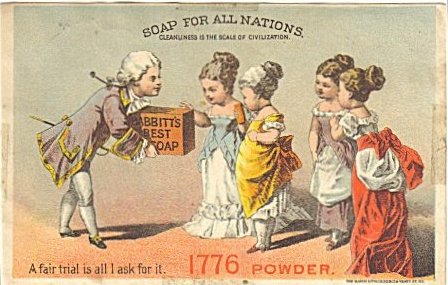
Whatever the reason it’s obviously effective, from BA’s “The Nation’s Favourite” to Benjamin Babbitt’s “get on the bandwagon” used way back in the mid-19th century (he also gave “for all nations” a go as well). I guess we all want to be different enough to stand out but need to feel average enough to be normal.

Whatever the reasoning, 1 out of 1 Simons can’t help but feel a little disappointed in the lack of free thinking on this one.

Tuesday, 30 June 2009

"News, news, news - that is what we want. You can't beat news in a newspaper."

The one thing I always fear with every new brilliant digi gizmo/application/network/invention/etc is that, 9 times out of 10, it provides yet another means for my obsessive need to stay up to date with news, no matter how irrelevant, to take control. The side that screams “check what’s going on out there – just in case”. The side that keeps clicking refresh even though you know nothing has changed in the last 22 seconds.

From my BBC homepage to Google News Alerts; to RSS feeds and journalist blogs; to Digg stories and iPlayer; and, of course, the BlackBerry for that 10 minute walk back from the tube. And then comes Twitter, a constant source of updating news fuelled by community and conversation. News by the second!

Yet, for some reason, I still try and read The Times in its full archaic (alas non-broadsheet) paper glory on the way into the office.

At a basic level a newspaper is “a publication containing new, information and advertising” all of which I can now get more quickly and more of online than I can in physical form. (Admittedly I can’t get online on the tube but there’s always a cheeky podcast.) So what’s it giving me that I’m lacking online?

Extra content and insight? All those opinion pieces, reviews, even obituaries amongst the daily news was my first thought.

Much as I enjoy the non-news elements of a good broadsheet I can certainly get more of them online. In fact, traditional newspapers are starting to get pretty good at providing this on their own online destinations. I can get more football info from thetimesonline than I can in their Monday supplement.

Even more worryingly, some recent stats from Moody’s Investor Services suggest that only 14% of a paper’s operating costs are spent on content with some 70% going towards making it a physical item (printing, distribution, etc).

So if it’s not its contents, what is it?

For me, I think it’s a trust thing. The authority a newspaper brings.

Back in ancient Rome Acta Diurna, or Daily Acts, were carved onto stone and placed in the forum by the local government for all to see. Daily news was tangible, permanent and from an authoritative source. Does a piece of paper with that familiar well-fonted title play the same role for me?

Authority’s an interesting area for news. Personally, I’ll ignore the likes of The Sun when reading football transfer news and take a large chunk of tweets from people I’d never even heard of with a pinch of salt. But if The Times says it, I’ll listen. Eric Schmidt’s infamous quote rings true: “The internet is fast becoming a cesspool where false information thrives”.

Jefferson once stated that “whenever the people are well-informed, they can be trusted with their own government”. I guess this poses the question of who do you trust to keep you ‘well-informed’? The words ‘The Times’ or ‘Guardian’ give me that trust, reliability and authority and are best manifested, like with the Romans, in their full paper form.

You could argue that newspapers could simply take their name online and, indeed, some of them are. But they’re still playing catch up. Murdoch was spot on when he said “Big will not beat small anymore. It will be the fast beating the slow”.

There has been a fundamental shift in the transmission of news. The likes of Twitter have democratised journalism and rendered communities quicker and more agile at providing the news that newspapers once served to them. Until papers find a way to harness this and, in my opinion, harbour it with their own authority they will always be chasing the pack.

(NB I think the BBC is a good example of using UGC alongside their authority with submitted pictures etc, but they haven’t had to hurdle a transition from newsstand to browser.)

This needn’t be a threat to journalism either. Many digital streams actually promote the individual more than the group (I’m more likely to follow Iain Tait on Twitter than I am Poke for example).

This debate will keep rattling around I’m sure. Chat about monetising news online, advertising models, death of journalism, etc, etc. One thing I am sure of though, you might be able to take away The Funday Times, but you can’t take away the place on my dining-table for the papers on a Sunday.


PS As an aside, it’s interesting to see the likes of the New York Times accommodating online behaviour offline by devoting their second and third pages to abstracts of the paper's content.

Monday, 11 May 2009

Milk Brands? Who are they? Exactly.

Random thought of the day, well week actually – I want to work on a milk brand.

The most basic of commodities in the UK are already awash with brands: bread, water (for some reason we now like water from volcanoes), toilet roll, even baked beans. Whilst, in agency land, we’re always after an automotive, finance or booze client. But one of the most natural commodities around, milk, goes largely unnoticed.

Think about this for a stat: in the UK we consume 99l of beer per capita per year but 111.2l of liquid milk. That’s around 82l per person per year!

So why isn’t much happening on the branding front? Other than Cravendale it’s hard to name a milk brand (excluding products that use milk like Nesquik), certainly nothing to match the likes of Volvic, Hovis and Heinz. Yet when milk is given a chance it gives the impression of being a great brief to work on:


  1. It’s celeb-tastic, from Linford Christie in the ‘Wake up to milk’ ads to George Best and Rolf Harris in the ‘White Stuff - Are you made of it campaign

  2. Wacky ads are actively encouraged, from slurping morris dancers for Cravendale (a personal favourite) to the zany ‘Gotta Lotta Bottle’ ads.

  3. It affords some fun digi work such as Makethetea.com settling many an office argument.

  4. Creative works globally.


The now legendary ‘Got Milk?’ campaign from the early-90s sums it up for me. Heralded as one of the best ideas still going (with around 90% awareness in the US) it’s used icons from Billy Ray Cyrus to Superman, has gone global (check out Toma Leche? In Mexico), has an addictive, if not strange, website and if imitation is the sincerest form of flattery then it wins there too.

Maybe I’m just charmed by the Accrington Stanley scouse moment (which I’ve skilfully sidestepped), but for now “Int Milk Brilliant”?

Tuesday, 28 April 2009

Masses of Influence

I’m reading ‘Nudge’ at the moment and it’s full of great thinking on how people make choices and how a variety of factors impact their decision making process. One particularly interesting point is the role of Social Influence – how following what others and the larger crowd think and do affects our own decisions.


I mentioned an experiment by social psychologist Solomon Asch a while ago demonstrating such an effect (here). In this case participants changed their answers to a simple question after finding out others had answered differently (“Which is the longest line”).


A more extreme (and grave) example can be found in Guyana. Facing tax evasion charges in San Francisco in 1978 the founder of the People’s Temple, Reverend Jim Jones, moved one thousand of his followers to a small village in Guyana which he named ‘Jonestown’ (unimaginative really). As the law caught up with him and facing more serious crimes of child abuse Jones prepared vats of poison and decreed that his followers should poison themselves and follow him in committing suicide. Despite some resistance his followers relented and poisoned themselves and their children amidst social pressures opposed on each other. All but two were found dead.


This is a clear example of the mass influencing individual decision, albeit in a rather harrowing way.


A current, and less horrific, example of such behaviour is Susan Boyle from Britain’s Got Talent. In the space of 3 days clips of her crooning had racked up over 100 million views on YouTube (still rising) with various versions occupying 7 of the top 10 most viewed spots this month. And this wasn’t just a YouTube phenomenon – check out the surge in global search terms too.


In this case the 'Badger Lady' had the advantage of over 10million people (est.) seeing the clip first hand on TV instigating the conversation before any cyberspace fun began. The ball was rolling already.


This is the key. Get the ball rolling then let the masses take over. Why wouldn’t you want to watch something that everybody else is talking about? So how do you set the ball rolling without the luxury of a spontaneous story or a primed TV audience?


Fallon give a great example of how to do this with their rather random “Kittens Inspired by Kittens” YouTube clip (now with over 4million views). Whilst focusing on making content sharable, interesting and ‘imperfect’, their main trick for setting the ball rolling was to find and use key online influencers, often found in the most random corners of the web.


Amidst the current Social Media zeitgeist this type of ‘Influencer’ strategy is becoming increasingly relevant and useful. We’re catching on to the fact that simply plonking a video of a dog running into a wall and ‘hoping’ somebody latches onto it isn’t always enough (although there are, of course, exceptions!).


Don’t just think about how to tell your own story, think about who’s going to tell it for you, who they’re going to tell it to and where they’re going to tell it.


Then leave it to the masses.


But be careful if you’re planning on starting a religion.

Friday, 10 April 2009

Dividing and Twittering

Twitter here I come.

I've tried Twitter a couple of times before but was never quite sure how I'd use it so I've lost interest. But now I have a cunning plan. I usually manage to update this blog at least once a month (poor, I know) so for all the fun little things that pop up on email, on other peoples blogs, and so on that I never get a chance to do anything blog-worthy with, I'm going to use Twitter.

So if you fancy taking a peak just pop on over to http://twitter.com/GregorsTweet

Right... I'm off for a Tweet.

Monday, 30 March 2009

Daddy, what's a planner? Part II

A while ago I wrote about my inability to describe what a planner is to my mum and concluded with this great little ditty on being an Explorer by Keri Smith:


In truth this sidestepped the question of what a planner was and instead gave a really nice description of what they should do but it seemed a far better approach. Nearly a year on and I came across this post from Leon Phang of Swedish agency of Jung von Matt. He’s managed to round up an assured collection of top-table planners from Russell Davies to Faris Yakob and asked them all one simple question (sounds dangerous already):

“What’s your best advice for the next-generation of young and ambitious planners?”

Predictably, answers were broad ranging with a whole host of words of wisdom from “solving the problem is more valuable than last week’s copy headline” (Spicer) to “planning is all about getting people to do stuff” (Davies). However, what was really interesting was that so many of the wisdom inspired words seemed to preach the same basic principles of being an ‘Explorer’. Be observant, build rapport, be instinctive, be intuitive, be interesting/interested, read!

When I was thinking about writing this post I was trying to think of a typically over-opinionated response to all of this advice from the so-called top dogs. What would my answer be? What would I pass on to the young in my future days of planning guru-ship? What have they missed? There must be something insightful I can throw into the mix?

But, I think I’ll stick with the Explorer for this one. Not just because it sounds quite cool and because it’s written in quite a twee way, but because it really hits the nail on the head for me.

Or maybe I’m inadvertently taking Yakob’s advice after all – “Steal everything – every trick and idea – and make them your own”.

No, it’s my blog and I’m sticking with the Explorer.


PS Interestingly Leon Phang actually links his job description to the Wikipedia entry for Account Planner. Wish I’d found this a year ago, would've been a lot easier.

Thursday, 26 February 2009

Visualising the Geek Within

One of the things I enjoy most about the planning department at Weapon7 is the fact that all the planners sit together – account planners alongside data and social media planners. All with a wide mix of experience and working on a variety of accounts across the agency, sometimes independently and often together. But before I get too happy families it’s worth pointing out that there is one tiny drawback: it turns you into an absolute geek.

My current ‘geekism’ is Data Visualisation (damn data planners).

It all started innocently with a light reading of Edward R Tufte’s “The Cognitive Style of PowerPoint: Pitching Out Corrupts Within” (OK, it does sound very plannery but any man who can quote Jas Elsner’s “Imperial Rome and Christian Triumph” in one sentence before summarising Lincoln’s Gettysburg Address in six slides deserves a look in my book). Then, before I knew it, I had blogs like ‘Analytics Arbitrage’ and ‘Extreme Presentation' infiltrating my iGoogle.

I just can’t help myself – I’m fascinated with cool ways of visualising data. Give a boy with a hint of OCD the chance to see the frequency and typology of “I need” phrases on twitter using a zoomable decision tree and, well, there goes the afternoon. I’m hooked. I’m like a kid with one of those ‘Magic Eye’ books from the 90s.

There is some (post-rationalised) method in the obsession though. Planners often muse that there’s insight in even seemingly meaningless bits of information - you've just got to find them.

These smart visualisations force you to look at data in new and engaging ways that allow these lovely info nuggets to shine. They bring the hidden to the fore, the ignored to the centre of attention and the meaningless to the front of mind. And, if you consider the amount of snippets of data left behind on digital media by people everyday and you've got yourself a galactic starscape of insight waiting to be found through a visualising click, zoom, drag, twist or twirl. Brilliant.

Here’s what I’m particularly hooked on at the moment:
BBC’s Britain from Above (especially the plane one),
Watching the Growth of Walmart across America from 1962 (if you zoom out too far the US looks pretty scary),
The Ebb and Flow of Movies – Box Office Receipts 1986-2008,
Great little video of the role of data day to day (and a good tune too),
A Visual Guide to Where Federal Tax Dollars Go.

Before I have to forcibly end this latest obsession I should probably have a stab myself. So here’s my final homage to data planning:


(Bollocks to the above, I’m old school at heart.)

Wednesday, 28 January 2009

Blogging, Fear and Meerkats

So, one year into ‘The Blog’ and I’m still, just about, maintaining it. A year’s worth of integration, data, trends, recession, trust, social media, online brands, and a bit of Charlie and the Chocolate Factory, Cicero, singing kittens, pancakes, suicide and a new agency (Weapon7). Hmm.

This started out as a personal online library documenting interesting, but currently useless, things in the hope that they may be of use at a later date. If I’m honest, it’s actually become more of a mini project on the side supported by a constant little voice in the back of my head telling me to ‘do something good’. It’s debatable whether I’ve managed it or not but it has certainly got me thinking.

I definitely enjoy writing my blog, but I still don’t think I’m comfortable with it all yet. Clicking ‘Publish Post’ is still accompanied by that same millisecond of panic usually associated with the realisation that I’ve sent my ‘funny mail’ to the wrong Chris (why must Outlook insist on putting his name first anyway?). The difference with this is that the panic is constantly fuelled by the fear that somebody may actually read the splurge I inconsiderately fling across my own little piece of the World Wide Web. I know I’m being paranoid but Jesus, what if I’ve missed an apostrophe?!

With this in mind I’m not going to bother trying to sound smart or all wannabe plannery for this one. Instead, here’s something that made me chuckle. It’s a new campaign promoting comparethemarket.com using Meerkats.

CompareTheMeerkat.com

I don’t know what it is about animals and banks that tickle me (like here) but this made me smile. Given the current economic climate I quite enjoyed watching Meerkats go spelunking in Pakistan and knitting in Nairobi whilst I was perusing the merits of variable mortgage rates vs fixed.

More importantly, it’s managed to get comparethemarket.com imprinted in my mind where I have actively resisted these types of sites before. I was quite impressed with the size of the Meerkat site. I’d seen the TV ad but presumed that it would simply be a homepage take over but no, there’s a whole host of Meerkat fun in there. (Although it does make you wonder what people were searching for to prompt such a campaign!)

Anyways, the fear’s starting to set in. Onwards into another year before the paranoia takes hold…

Monday, 22 December 2008

Do I want to be Harry Redknapp?

OK, so this post is a bit rant inspired but, I was driving down the M4 into London yesterday afternoon and noticed a Nintendo poster hosting a picture of Harry Redknapp and the line “Play Mario Kart like The Redknapps”.

For some reason it really pissed me off and took a bit of the shine off my own love of Mario Kart (virtually unbeatable as Luigi I might add!). The ad was rough and ready, unimaginative and very, well, not-Nintendo. But there was something else that bugged me that I couldn’t put my finger on. It’s not that I disapprove of celebrities advertising products, I actually quite like the matching TV ads showing the Redknapps, Patrick Stewart, Girls Aloud and co having fun with various Nintendo stuff. So what was it? What was different? (Other than the fact one’s a poster and one’s on tele.)

This got me thinking about Carl Hovland. Whilst working as part of the US World War II propaganda machine Hovland examined various ways to present a persuasive message. He concluded that the most effective approach to persuasion is to present an audience with a logical argument showing how changing their attitudes or behaviour will benefit them. For example:

Or, in the case of the Wii TV ads, we’re told that we should buy Mario Kart as playing it with all the family means we’ll have a great time, as shown by the Redknapps doing exactly that. Sounds pretty logical. What about the posters? Here we’re told that if we buy Mario Kart we can be like the Redknapps.

Now this is a different message and where I think they’ve gone off piste. I don’t actually want to be Harry Redknapp (despite having Louise Redknapp as a daughter in law); I just want to have fun with my family like he does on the tele.

Hovland developed his theories further and, in 1953, presented the “Yale Communication Study”, the basic premise of which remains well known and well used today. In trying to persuade people there are four main variables: Who says what to whom by what means.

In the case of the Mario Kart example not only has the ‘what’ (message) and the ‘means’ (TV to poster) changed, but also the ‘who’. For the TV ads it was the Redknapps telling me that Mario Kart was great, on the posters it’s Nintendo.

It is generally agreed that, amidst a range of factors, the degree of involvement of the ‘who’ with the ‘what’ (message) affects the audience’s interpretation and evaluation of it (Social Judgement Theory). For instance, we’re more likely to believe our neighbour who owns the same car as the one we’re considering buying than the retailer who’s trying to flog it to us. Similarly, we’re more likely to listen to our pals the Redknapps who, after all, look just like our very own happy family than we are Nintendo, the manufacturer of the game.

Of course, I’m not suggesting that companies shouldn’t advertise directly (that would just be silly) more that the posters have missed the crux of the Nintendo campaign. It’s meant to be about the Redknapps showing how good the game is, not Nintendo trying to turn us into minor celebrities.

Maybe it’s just me. Maybe I just don’t want to be told so overtly that I want to be like the Redknapps because secretly I do? Or maybe I’m worried little Louise Redknapp would actually whoop my Luigi alter ego? Or maybe the posters are just crap?

I think I’m with the latter. (Luigi would definitely win.)

Thursday, 20 November 2008

Simon is considering his Social Media status

I’ve been doing a lot of work with Social Media of late and unsurprisingly everybody’s first point of reference if Facebook. It seems to take a bit of effort to get clients to think bigger than Facebook sometimes and it can be even trickier getting them to realise what they can actually do with the network itself.

We were discussing this for a client this week saying how great it would be if rather than simply creating a fan group we could get everybody to change their status to show that they were taking part in our promotion. Something like Alison Christie is loving the TNCC Mini-Movie Maker right now.

Whilst I really liked the sound of this I’ll own up to not really ‘getting’ the whole status update thingy. Anda Goddard is looking forward to buying a fish. Keith Halifax is sore from football. Simon Gregory is probably skiving work right now. Thanks for letting me that your life is more eventful than mine.

Then I came across a decent post by Grant McKracken on “Exhaust Data” (the posh term for status updates). He suggested that these updates act as phatic messages (where the function is to perform a social task rather than overtly carry a message) carrying a message in their own right:

"A 'newsflash' about my cat helps keep the network node called Grant McCracken from blinking out... But this is not just news that I am extant, but that I am, as much as this is ever true, emotionally and intellectually active."

A status update acts as a consistent reminder that I’m here, you’re here, we’re both OK, our network’s OK, and we can communicate whenever we want. Nice way to look at it. Rather strangely this reminded me of a random stat about marketing spend and return on capital during a recession.

PIMS International conducted a piece of research on ad spend during a recession looking at the resultant returns and market share when an economy starts to recover. Based on a wide range of companies they came to the following conclusions:


The argument that you’re better off spending during a recession is old ground, but the effects of maintaining spend were surprising. 3% Return On Capital Employed and 1% increase in Market Share during a dodgy period is pretty good! Is this the equivalent of maintaining your status update?

Is maintaining marketing presence a brand’s equivalent to us updating our status? We know that consumer confidence is vital during a recession so can, and is it important for, brands to send out similar phatic messages? We’re still here, we’re both OK, we’re still talking, we’re here when you need us, everything’s all good?

Simon Gregory is unsure what this means for the Social Media presentations he’s working on.

Friday, 10 October 2008

Veni Vidi Data-avi(?)

OK - dodgy title I know (and will probably do bugger all for search traffic) but anyway, this week I was asked to right a couple of paragraphs on my opinion on the role of data in today's media climate. So I thought I'd share.

Media use, habits and diets have been changing steadily for several years – ‘Media stacking’, the Internet, e-mail, mobile phones, and so on. Unsurprisingly, changes in consumer behaviour have followed. As Bob Liodice (President and CEO of the Association of National Advertisers) confirms, “It’s no longer a matter of if consumers change their behaviour, but how fast and whether we can keep up.” Never has understanding the consumer been so important.

Today the customer journey may not be any longer than it was 10 years ago, but it is has certainly become much more random and harder to follow. Our traditional ‘funnel’ has become a snakes and ladders board.

Luckily, the increased use of digital technology has created a magnifying effect allowing us observe what consumers are thinking, experiencing and doing relative to the buying process with greater clarity and granularity than ever before. We now have access to real time information about what people search for, buy and how they make their purchase decisions. Facts, figures, likes, dislikes and so on. The value of data has increased tenfold*, if not more.
However, this data, unless it is harnessed, will remain nothing more than facts, figures, likes and dislikes.

Despite this changing landscape the basic principle of delivering the right message to the right people at the right time holds true. In today’s climate it is essential that we use this wealth of raw information to form real insights and a superior understanding of our consumers. Only then can we respond to what we’ve learned quickly and with a greater degree of relevance irrelevant of media.

We are no longer media-centric, but consumer-centric instead.


And there we go. Thoughts?


*Allen Adamson's new book BrandDigital was insightful on this

Tuesday, 23 September 2008

Interacting with Interactivity

OK, so I’ve been pretty inactive the last month (I blame it on house and job moving). Anyways, given that I’m now getting my hands dirty in the digital world I thought I’d better have a bit of a read up on interactivity. So I read one of the most un-interactive overcomplicated titled articles in the world –

(To be fair, once de-academicised it’s pretty good reading.)

Here's what struck me...

It’s generally agreed that there’s a basic advantage to digital methods of communication: it encourages active participation and not just passive reception. You can get involved more with it. It’s interactive.

Take a look at “interaction” in the Oxford Compact and you get two definitions:

  1. Influencing each other
  2. (of a computer or other electronic device) allowing a two-way flow of information between it and a user, responding to the user’s input

The second definition will carry no surprises for digi advertising folk but the first is interesting. Can simply making something interactive make it more influencing?

There's a solid argument to suggest so:

  • Numerous studies (especially by Sundar) prove that there is a direct correlation between amount of interactivity and positive appraisal of a website. Basically, more interactive stuff makes people like the site more.
  • Secondly, interactivity increases involvement which leads to greater engagement with the site's content. This, in turn, increases scrutiny of the site. People become more focused and form more considered opinions.

So are we saying that if we increase interactivity people will like our stuff more?

Not necessarily. There’s a few things to consider:

  • Site vs Content – A positive opinion of a website doesn’t always mean a positive opinion of the actual content. I might think a funky new agency’s website is brilliant but it doesn’t mean I think they have something interesting to say.
  • Navigation – What if interacting is a pain in the arse? Sure, there are loads of things I can click, tweak, drag, etc but if it’s too much of a hassle it’s a turn off.
  • Cognitive Burden – If I’m using so much of my brain interacting and determining how to best digest the site have I got enough of my little brain left to absorb the actual content properly?

It’s funny really. People claim that more interactivity makes them like the site more. Yet, when it comes down to engaging with the actual content or message of the site there’s less of a correlation. Too little interactivity and no-one wants to get involved, too much and they miss the actual content. ‘Medium’ interactivity seems to be the way forward and results in more positive appraisals.

Of course, getting people to like your content is also dependent on the construction of the message itself not simply on the cleverness of the interactive design. Nonetheless, interactivity has the potential to generate greater involvement and engagement. There must be a sweet spot somewhere.

Finding this ‘sweet spot’ is one of the keys to making successful digi campaigns in my opinion, but it can be tricky. And does this spot change based on type of content (eg entertainment vs news)? Or by gender, relationship with brand (prospect vs advocate), motivation for visiting and so on?

Either way, maybe content isn’t always king after all…

Tuesday, 29 July 2008

Stupid Google and the Pancake People

I came across a really good Nicholas Carr article during my post-holiday-looking-for-anything-to-avoid-work blues last week. It’s about how Google is changing the way we consume info and had a lot of blogging action already. (Thanks to Amelia for the link.)

The basic principle is that our mind is adjusting to consuming information the way the internet presents it – in short, sharp, interlinked snippets. We quickly scan small chunks of info hopping from page to page in search of that key nugget of information (‘power browsing’). Hyperlinks propel us from site to site where footnotes once suggested further reading, aggregators give a peak at info where “Introductions” once gave an overview and Yahoo Answers lets us cut through the crap altogether and grill a whole community for specific info.

Apparently all of this is obstructing our ability to read and absorb longer texts, full articles and books. The British Library, for instance, noted that people using their online journals and e-books constantly jumped from source to source rarely returning to any text they’d previously visited. They simply “skimmed” a few pages before bouncing to the next article.

Carr points out that, ironically, we may actually be reading more today than we did in the 70s (thanks to SMS messaging, e-mail and the internet) but in a totally different way. “Once we were scubadivers in a sea of words. Now we zip along the surface like a guy on a Jet Ski”. This is even being echoed offline. Since March this year The New York Times has devoted the second and third page of every edition to abstracts of the articles featured.

Way back in the 4th century BC Plato’s character Socrates feared that the development of writing would hinder day to day general knowledge (men would “cease to exercise their memory and become forgetful”). The Gutenberg printing press drew similar concern from Squarciafico (the Italian Humanist) questioning whether the easy availability of books would lead to intellectual laziness. Should we be concerned that the net is making us stupid?

I guess it’s a simple debate of breadth vs depth – we may learn about a whole load of new stuff, just in less detail (although there are exceptions, such as Wikipedia). I mentioned this point a while ago when debating whether ‘integrated clients’ would struggle to review a variety of work from a variety of agencies across a variety of media. Would they become ‘pancake people’ (thinly spread across a broad area)?

What about a ‘pancake agency’? Is a fully integrated agency simply a jack-of-all-trades? A recent report from the University of Chicago Graduate School highlights the so-called “Dilution Effect” (Rory Sutherland touched on this the other week). Put simply, people generally want things to serve more than one purpose, but when said thing accomplishes multiple goals it becomes less associated with the achievement of a single goal. For instance, a laser-pen is great when you want to give a lecture and make notes at the same time, but would you use it just for day-to-day writing? Apparently not. Likewise the gym – it may have started as a great place to exercise but once it also becomes a place to socialise it loses an element of its status as a get fit venue.

So would Fallon, for example, lose some of its reputation for great TV ads if they started doing good DM? And could an integrated client judge it anyway?

Then again, if we were to add a little depth to a well known figure of speech we’d realise that “Jack of all trades, master of none, though ofttimes better then master of one”. Hmm…

Tuesday, 8 July 2008

Naughty Me

I’ve been a little lax of late (new job, exams, etc, etc) and given that I’m buggering off on holiday tomorrow I thought I should leave at least a token entry to keep my blog momentum up! So here are a couple of things grabbing my attention at the moment…


The Newton Machine
This one’s hit the blogosphere already (thanks to Alex for the link) but the more I think about it, the more I really like it. Basically, TopShop have installed a ‘Newton Machine’ in their Oxford Street store. This ‘machine’ (invented by the German photographer Helmut Newton) is actually just a camera. However, it is set up in a way that allows the model to take the photos themselves (i.e. no photographer needed). The model stands in front of a mirror and holds a small controller that lets them adjust the camera’s timer and flash thus allowing them to perfect their pose before taking the shot. When they’re good to go they simply press a button and take the picture.

Here's its launch in 1972:


Newton’s inspiration was two-fold. Firstly, he recognised that models were usually better at taking photos than their (more often than not) boyfriend photographers. Secondly, it was a middle finger to the controlled and static fashion shoots of his time.

In TopShop, you’re the model. Try on some TopShop clothes and orchestrate your own photo shoot using this Newton Machine. Your pictures are then posted on an online gallery and you get your own A5 paper copy to take home.

More importantly, TopShop have really managed to embrace Newton’s principles and given up a bit of their brand to their customers. Bo**ocks to the static half-dressed mannequins and the engineered instore posters that we put up every month, you show off the clothes you want to wear however you want to show them off. And have fun doing it in the process.

Newton himself claimed that his job was to “seduce, amuse and entertain”, TopShop lets customers do it themselves all under the TopShop brand. Clever. And, if I am allowed to be a little self-indulgent it brings to mind a previous post on Trust and who we consider trustworthy (i.e. "people like ourselves").


Adidas Football – Dream Big
For me, Adidas really gets football. I’ve given them the nod before and their “Dream Big” online campaign is another great example.

I’m guessing it’s come out of their “Impossible is Nothing” stuff but in this campaign Adidas sends some of its top football stars to random ‘local’ destinations to have training sessions with the local teams, all of whom have ‘written’ to Adidas asking for their help. (They’ve dreamt big – get it?) Gerrard, Viera and Beckham hotfoot it to the smallest football league in the world – the Isles of Scilly (only two teams and one football pitch) – taking their Predator boots and merchandise with them whilst the likes of Kaka, Alonso and Fabregas fly out to tiny Andorra to teach youth teams the art of passing with their AdiPure boots.

Each trip is broken into a set of clips that are drip fed onto the site and, despite initial reservations, I reckon they’re really good. (I even get an e-mail letting me know when a new series is out.) They’ve got a real feel of the classic Nike “Parklife” advert which every aspiring Sunday League Player relates to. Maybe I’m being a bit naïve, or maybe it’s just because I’m one of those aspiring Sunday League Players, but I’m hooked nonetheless.

In fact, I’m going to write Adidas a letter…

Tuesday, 24 June 2008

Public Service Narrrowcasting

Ofcom predicts that by 2012 100% of the UK will have digital multi-channel TV. Despite the current strength of commercial broadcasters such as Sky and Virgin this should actually be great news for Public Service Broadcasters (PSB). Niche channels for niche programmes designed for niche audiences, a real way to satisfy all tastes of our culturally and demographically varied population. Gone are the days of us young city folk liking or lumping the latest topical farming issue on the Archers. We’ll all head to the American version of the Apprentice on our channel instead.

To be fair, multi-channel TV has been around for a while now and there have been some real success stories, especially amongst the sports, movies and generic entertainment channels. But there have also been some losers, most notably the likes of science, nature, classical music and history (the clever stuff you might say). Sadly a nature programme on a nature channel will be lucky to get 1% of the audience it could have received on wide-ranging BBC2.

One could argue that this is natural selection, democracy working at its best, people voting with their index fingers. However, niche channelling is rather anti-PSB. According to Ofcom Public Service Broadcasting has a duty to:

  • increase our understanding of the world
  • stimulate our knowledge and learning
  • reflect our UK cultural identity
  • to ensure diversity and alternative viewpoints are represented

Its aim, and indeed its success, is based not just on audience size but also on its schedule range.

David Attenborough, writing for The Times, is in firm support pointing out that the role of PSB is to cater for the whole population, not segregate it – Broad-casting, not Narrow-casting. He supports this argument by suggesting that many people hold ‘allegiances’ with specific PSBs: “the notion that great numbers of people, tired after a hard day's work, come home and flip through 50-odd programme channels to decide what to view is, in fact, largely illusory.”

I’m with Attenborough on this one. As Cowper (the guy who did the “variety is the spice of life quote”) says “The earth was made so various, that the mind of desultory man, studious of change and pleased with novelty, might be divulged”. It is down to our PSBs to do this ‘divulging’ (after all, nearly all of us pay for them).

However, from an advertising perspective niche channels (whether fully commercial or part public), should be the way forward. Greater ability to target audiences, more tailored creative, better media positioning, less wastage, and so on. Yet this is often not the case, if only due to incompetent media buying. As a youngish, laddish, fan of witty banter I’m partial to a bit of Top Gear and Never Mind the Buzzcocks on ‘Dave – The Home of Witty Banter’. I’m less partial to the breast milk and tampon adverts in the breaks though.

Ultimately a wider variety of content can only be good for the consumer but the digital world is asking questions of Public Service Broadcasting and their offerings (note BBC tackling it head on with its iPlayer). As Petrarch said, “Sameness is the mother of disgust, variety the cure”. It will be interesting to see what the cure is in 2012.

Monday, 2 June 2008

Who can you trust? PART 2

I wrote a piece on trust a while back and concluded that companies are more trusted than governments, but the way in which we interact with them is crucial. A couple of weeks later I went to an Acacia Avenue seminar on the topic and decided that I’d only just scratched the surface. Delving deeper was not as easy as first thought.

Even the basic definition of trust is pretty confusing – there are 24 plausible descriptions. But the first (and presumably most read) goes as follows:

“Reliance on the integrity, strength, ability, surety, etc., of a person or thing; confidence.”

This seemed pretty solid and even pays homage to the word’s origin (it comes from a Middle Age game called “tryst” involving one set of villagers chasing a load of rabbits towards a line of club-bearers who, ‘standing in tryst’, would wait for the bunnies to arrive before bopping them dead). However, one key element, featured in other definitions and implied in the game outlined above, is missing – expectation.

This is where trust works for brands. Consumers have an expectation that brands will represent/display certain attributes. They don’t just rely on these qualities, they expect them. Stability from John Lewis (only 4 chairmen in the last 100 years), openness from Pret a Manger (recipes given away online), practising what you preach from Innocent (Fruitstock) and self-confidence from ghd (that one’s from the girls, I don’t actually have any hair to straighten).

Despite this expectation and my previous conclusions a GlobeScan survey on trust in institutions found ‘global companies’ and ‘large national companies’ to score second and third from bottom respectively. In fact, both scored negative ratings whilst ‘armed forces’ topped the table. However, a glance at Edelman’s survey on specific brand trust suggests they are far more trustworthy then the army with Johnson & Johnson, Coca-Cola and Microsoft leading the way!

So what’s going on? The key difference is in the question asked in each survey. GlobeScan measured “Trust in an institutions ability to operate in society’s best interests” whilst Edelman’s focus was simply on “Which brands do you trust”. One concentrates on the community and one on the individual. It pains me to say it, but Thatcher spotted the importance of this difference a while back – “There’s no such thing as society. There are only individual men and women”.

I don’t agree with her sentiments but recognising this difference is essential for the poor performing ‘global companies’. Ultimately people still crave community (think London Marathon, Diana’s funeral, Facebook, reaction to Thatcher’s comment, etc) and it is one of the original pillars of trust. Brands are our bunny-boppers.

So is the trick nowadays to think community/society and not just individual? Perhaps – Coca-Cola and Microsoft are fighting AIDs, HP are saving the forests, everyone's chasing 'green trends', and so on. Maybe we’re not in the age of the individual after all?

Hmm… this may need a Part 3. Until then, I’m sticking with Bob Dylan – “If you want somebody you can trust, trust yourself”.

Monday, 19 May 2008

Daddy, what's a planner?

Whenever there’s been a bad day at the office our creative director has got a great leveller/motivational line:

“It could be worse; we could all be doing real jobs.”

And although it’s meant as a light hearted gag I’ve always thought he’s right, to some degree. Now whether what we do counts as a real job or not is a bigger question. The problem for me is that whilst I find it unproblematic telling my mum the bits about work that make it not a real job, I struggle to actually explain the real job that I do! It’s easy to wax lyrical about the crèche-like atmosphere, table football, well-known brands and boozey lunches, but really difficult to explain what a planner does.

Now, as a planner you’d think this would be easy – a vaguely abstract idea translated into an easy to swallow thought piece. But it’s not. I don’t really know how to explain exactly what I do. It’s a bit like a doctor being the worst patient.

I even looked for advice from the APG and got an even more complex answer listing the variety of characters a planner can play – social anthropologist, brainstorming facilitator, data analyst, think piece polemicist, and so on. None of which are very ‘mum facing’.

I’d like to think that I know what I do (or am at least meant to do), and to be fair there are different types of planners that specialise in different types of fields and that work in very different ways. Yet this is a very ‘inward-facing’ explanation – you get it if you work with planners. However, outside of adland all I end up with is “I do thinky stuff and google a lot” or something vaguely attempting humour (side-stepping the question).

Whilst this plagued me for a while, I’ve decided to give up trying to explain it and have taken a different tact. Rather than think about “What a planner does”, I’ve gone for “Who a planner is”. And I found this (thanks to my boss):


I don’t know who wrote it or where it’s from, but I like it. And in true planning style it distinctly resemble a beer induced back-of-a-fag-packet solution.

So if the client asks, I’m not a planner, I’m an explorer.

Monday, 12 May 2008

What every marketer SHOULD know

I'm constantly trying to read 'insightful books' on marketing, extend my skill-set through various courses, create routines that keep me looking for anything and everything vaguely interesting, listen to the gurus of the industry, etc etc...

However, this short list hits the nail on the head for me. It's Seth Godin's guide to What Every Good Marketer knows - a simple, concise list of marketing wisdom:

  • Anticipated, personal and relevant advertising always does better than unsolicited junk.
  • Making promises and keeping them is a great way to build a brand.
  • Your best customers are worth far more than your average customers.
  • Share of wallet is easier, more profitable and ultimately more effective a measure than share of market.
  • Marketing begins before the product is created.
  • Advertising is just a symptom, a tactic. Marketing is about far more than that.
  • Low price is a great way to sell a commodity. That’s not marketing, though, that’s efficiency.
  • Conversations among the members of your marketplace happen whether you like it or not.
  • Good marketing encourages the right sort of conversations.
  • Products that are remarkable get talked about.
  • Marketing is the way your people answer the phone, the typesetting on your bills and your returns policy.
  • You can’t fool all the people, not even most of the time. And people, once unfooled, talk about the experience.
  • If you are marketing from a fairly static annual budget, you’re viewing marketing as an expense. Good marketers realize that it is an investment.
  • People don’t buy what they need. They buy what they want.
  • You’re not in charge. And your prospects don’t care about you.
  • What people want is the extra, the emotional bonus they get when they buy something they love.
  • Business to business marketing is just marketing to consumers who happen to have a corporation to pay for what they buy.
  • Traditional ways of interrupting consumers (TV ads, trade show booths, junk mail) are losing their cost-effectiveness. At the same time, new ways of spreading ideas (blogs, permission-based RSS information, consumer fan clubs) are quickly proving how well they work.
  • People all over the world, and of every income level, respond to marketing that promises and delivers basic human wants.
  • Good marketers tell a story.
  • People are selfish, lazy, uninformed and impatient. Start with that and you’ll be pleasantly surprised by what you find.
  • Marketing that works is marketing that people choose to notice.
  • Effective stories match the worldview of the people you are telling the story to.
  • Choose your customers. Fire the ones that hurt your ability to deliver the right story to the others.
  • A product for everyone rarely reaches much of anyone.
  • Living and breathing an authentic story is the best way to survive in an conversation-rich world. Marketers are responsible for the side effects their products cause.
  • Reminding the consumer of a story they know and trust is a powerful shortcut.
  • Good marketers measure.
  • Marketing is not an emergency. It’s a planned, thoughtful exercise that started a long time ago and doesn’t end until you’re done.
  • One disappointed customer is worth ten delighted ones.
  • In the googleworld, the best in the world wins more often, and wins more.
  • Most marketers create good enough and then quit. Greatest beats good enough every time.
  • There are more rich people than ever before, and they demand to be treated differently.
  • Organizations that manage to deal directly with their end users have an asset for the future.
  • You can game the social media in the short run, but not for long.
  • You market when you hire and when you fire. You market when you call tech support and you market every time you send a memo.
  • Blogging makes you a better marketer because it teaches you humility in your writing.

He rounds this off with "Obviously, knowing what to do is very, very different than actually doing it".

This is a valid point, but let's not get too far ahead of ourselves. Irrelevant of whether you agree with Seth's approach, how many people do you know that even think around these areas let alone know or do? He's right, doing is the hard bit, but having an opinion is the first step in the right direction. The next is trying to use your outlook as a basis for everything you do. Actually achieving it... well that's a tricky one!

For me, it's not the knowers and the doers that I want to work with, but the thinkers and the triers.