I’ve been reading Chris Anderson’s latest book “Free” the last couple of weeks and it reminded me of an article I once read singling out the words ‘New’ and ‘Free’ as the two most effective words in marketing. Not too surprising but interesting nonetheless.
Alongside ‘New’ and ‘Free’ there’s another well known device that I do find surprising in its affect – the power of popularity. I’m talking about the pulling power of the ‘Nation’s favourites’, the ‘9 out of 10 prefers’ and the ‘People’s favourites’. Amidst current fascinations with herd behaviour I still struggle to believe that, in today’s individuality fuelled world, being the same as everybody else is so attractive. Whatever happened to the likes of Nike iD and so on?
Sure, there are plenty of examples of people following suit once a precedent has been set (a brilliant example is Matthew Salganik’s experiment involving the selection of music from lists with and without knowledge of previous participants’ choices. He found that as social influence increased – when participants could see what others had chosen – the popularity of songs became dependant more on previous choices than on quality. The full article is here) but I’m still surprised that such a simple statement can have such an effect. Especially when readers/listeners cannot tangibly see how the stat has been formed.
Is it a confidence thing? A safe bet? It’s well attested that we live in a loss averse society (eg we put a higher price on losing something than we do in gaining) so does it work because we’re scared to challenge the masses? A lot of purchase behaviour is confidence-based after all. From brand trust all the way through to Zappos offering free postage on online returns to alleviate the fear of ordering the wrong size clothes and getting stung for sending them back.
Or is it more about indecision and tipping points? Drowning in a plethora of choice following suit is an easy option. It gives a reason to get off the fence. If it’s good enough for everybody else then it must be fine for me. On a shelf full of over-scienced fluoride cleaning, whitening and enamel hardening a popular choice brings clarity to choosing actoothpaste. Conversely, we never know how much is appropriate to give to charity. The ability to see previous donations by friends on JustGiving makes it a lot easier.
Or is it just laziness? As the economist Nick Szabo points out even purchasing an item worth a penny carries a ‘mental transaction cost’, the value placed on the “is it worth it/isn’t it worth it” thought. There’s less thought needed if you tap into your herd instincts and follow suit. If there’s an option to take the least path of resistance then we’ll take it. We’ve got plenty of other stuff to think about, just follow suit and brain power’s saved.
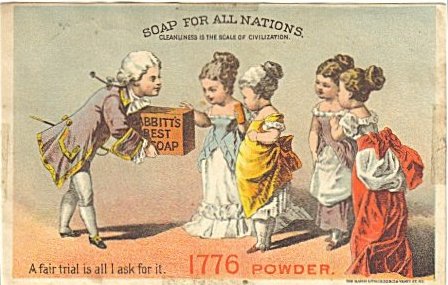
Whatever the reason it’s obviously effective, from BA’s “The Nation’s Favourite” to Benjamin Babbitt’s “get on the bandwagon” used way back in the mid-19th century (he also gave “for all nations” a go as well). I guess we all want to be different enough to stand out but need to feel average enough to be normal.
Whatever the reasoning, 1 out of 1 Simons can’t help but feel a little disappointed in the lack of free thinking on this one.
Monday, 31 August 2009
8 Out of 10 Cats


Tuesday, 28 April 2009
Masses of Influence

I’m reading ‘Nudge’ at the moment and it’s full of great thinking on how people make choices and how a variety of factors impact their decision making process. One particularly interesting point is the role of Social Influence – how following what others and the larger crowd think and do affects our own decisions.
I mentioned an experiment by social psychologist Solomon Asch a while ago demonstrating such an effect (here). In this case participants changed their answers to a simple question after finding out others had answered differently (“Which is the longest line”).
A more extreme (and grave) example can be found in Guyana. Facing tax evasion charges in San Francisco in 1978 the founder of the People’s Temple, Reverend Jim Jones, moved one thousand of his followers to a small village in Guyana which he named ‘Jonestown’ (unimaginative really). As the law caught up with him and facing more serious crimes of child abuse Jones prepared vats of poison and decreed that his followers should poison themselves and follow him in committing suicide. Despite some resistance his followers relented and poisoned themselves and their children amidst social pressures opposed on each other. All but two were found dead.
This is a clear example of the mass influencing individual decision, albeit in a rather harrowing way.
A current, and less horrific, example of such behaviour is Susan Boyle from Britain’s Got Talent. In the space of 3 days clips of her crooning had racked up over 100 million views on YouTube (still rising) with various versions occupying 7 of the top 10 most viewed spots this month. And this wasn’t just a YouTube phenomenon – check out the surge in global search terms too.
In this case the 'Badger Lady' had the advantage of over 10million people (est.) seeing the clip first hand on TV instigating the conversation before any cyberspace fun began. The ball was rolling already.
This is the key. Get the ball rolling then let the masses take over. Why wouldn’t you want to watch something that everybody else is talking about? So how do you set the ball rolling without the luxury of a spontaneous story or a primed TV audience?
Fallon give a great example of how to do this with their rather random “Kittens Inspired by Kittens” YouTube clip (now with over 4million views). Whilst focusing on making content sharable, interesting and ‘imperfect’, their main trick for setting the ball rolling was to find and use key online influencers, often found in the most random corners of the web.
Amidst the current Social Media zeitgeist this type of ‘Influencer’ strategy is becoming increasingly relevant and useful. We’re catching on to the fact that simply plonking a video of a dog running into a wall and ‘hoping’ somebody latches onto it isn’t always enough (although there are, of course, exceptions!).
Don’t just think about how to tell your own story, think about who’s going to tell it for you, who they’re going to tell it to and where they’re going to tell it.
Then leave it to the masses.
But be careful if you’re planning on starting a religion.


 Posts